


For decades, the Republic of Kenya (“the Country”) has financed national development and infrastructure primarily through tax revenues, external borrowing and concessional financing. However, rising fiscal pressures, expanding infrastructure needs and competing development priorities have increasingly strained this model, with funding needs outpacing the national budget’s capacity. The growing imbalance underscores the need to optimise existing public resources while unlocking alternative, long-term sources of development finance, driving the Country to embrace innovative financing models. In particular, the establishment of the National Infrastructure Fund (“the NIF” or “the Fund”) marks a pivotal shift from debt-reliant infrastructure funding towards a more structured and investment-driven financing model. The Fund adopts a fiscally prudent and market-oriented approach to infrastructure financing as it is designed to develop Kenya’s existing pipeline of investable infrastructure assets and channel private and institutional capital into commercially viable, high-impact projects. In doing so, the NIF provides a strategic platform for accelerating national development while strengthening long-term economic resilience.
Kenya’s Fiscal Realities
The Fiscal year 2026/2027 National Budget projects total revenue of Kshs 3.6 trillion against a planned expenditure of approximately Kshs 4.8 trillion, underscoring the continued pressure on Kenya’s public finances. A large share of the revenue envelope is committed to recurrent fiscal obligations, with 41.7% earmarked for debt servicing, 30.5% for the operational expenditure of both the national and county governments, and the remaining 27.8% for personnel emoluments. As a result, the budget is expected to record a fiscal deficit of Kshs 1.2 trillion, equivalent to 6.4% of Gross Domestic Product (GDP), highlighting the persistent gap between the Government of Kenya’s (GOKs) revenue base and its expenditure obligations. GOKs funding capacity is further constrained by persistent structural fiscal pressures, notably an elevated public debt stock of Kshs 12.9 trillion as at April 2026 and a debt-service-to-revenue ratio of 71.2%. Collectively, these obligations continue to erode fiscal space for development expenditure, particularly transformative capital investments that drive long-term economic growth and enhance national competitiveness.
Despite mounting fiscal pressures and narrowing budgetary headroom, Kenya continues to demonstrate considerable domestic investment capacity, evidenced in the depth of its institutional capital, including pension assets under management (AUM) of approximately Kshs 2.8 trillion, and private capital such as the resilient diaspora remittance inflows amounting to Kshs 661.2 billion. Such resources reflect the country’s growing capital base and present a significant opportunity to finance the Country’s development ambitions beyond traditional confines of the national budget. The imperative, therefore, is to mobilise and deploy the existing long-term capital in a more coordinated, strategic and sustainable manner. The foregoing underscores the importance of an institutional framework capable of ring-fencing capital investment for nationally significant development objectives without placing additional strain on the public coffers. Against this backdrop, the National Infrastructure Fund (NIF) emerges as a strategic blueprint for financing Kenya’s infrastructure ambitions while safeguarding fiscal sustainability.
The National Infrastructure Fund
The establishment of the National Infrastructure Fund in March 2026 marked a significant step in addressing Kenya’s estimated USD 5 billion annual infrastructure financing gap. With a long-term mobilisation target of Kshs 5 trillion (USD 38 billion), the Fund seeks to channel long-term domestic and international capital (primarily Development Finance Institution funding) into commercially viable projects across priority infrastructure sectors through a blended financing model. The NIF marks a strategic shift in GOKs role from a primary financier to facilitator and risk mitigator in bankable infrastructure projects. In doing so, it represents a shift from debt-reliant public spending towards a structured investment-driven financing model. It is worth noting that the Fund does not eliminate fiscal risk, but rather, repackages and redistributes the risks across multiple instruments and stakeholders. As of June 2026, the National Infrastructure Fund had mobilised approximately Kshs 310.3 billion (USD 2.4 billion) in foundational capital, largely comprising proceeds from the Government’s partial divestiture of its 15% stake in Safaricom PLC and the Kenya Pipeline Company (KPC) Initial Public Offering (IPO).
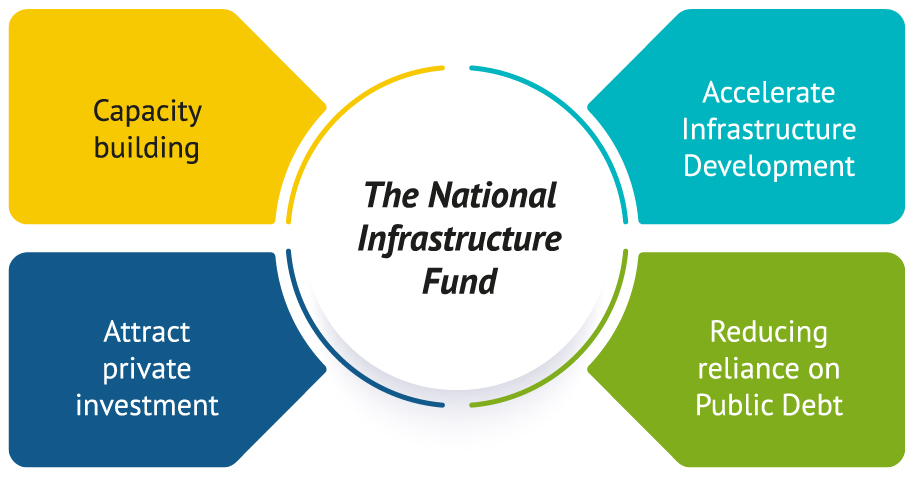
Figure 1: Core Mandates of the National Infrastructure Fund
Source: National Infrastructure Fund and Agusto & Co. Research
The Fund’s core mandate is to accelerate the delivery of catalytic national infrastructure by mobilising private capital and non-traditional financing sources at scale, over a 10-year horizon. The NIF is designed to attract capital from a diverse range of investors, including domestic pension funds, collective investment schemes, climate finance facilities, philanthropic contributions, development finance institutions, project-specific financing arrangements, as well as the Kenya Sovereign Wealth Fund. Notably, the establishment of the Kenya Sovereign Wealth Fund in July 2026 is expected to complement the National Infrastructure Fund by allocating a portion[1] of Kenya’s natural resource wealth to strategic infrastructure investment through its Strategic Infrastructure Investment Component. To crowd in these private and institutional capital, the Fund incorporates layered capital and risk-sharing structures, including guarantees and credit enhancement mechanisms, with an aim of de-risking large-scale infrastructure projects and improving investment appeal.
Making Infrastructure Investable
Kenya’s extensive pool of private capital remains heavily concentrated in government securities, as reflected by the banking sector’s c. Kshs 2.6 trillion exposure to the asset class. At the same time, the investment landscape is experiencing growing demand for alternative asset classes that offer portfolio diversification and competitive risk-adjusted returns. Within this evolving landscape, the National Infrastructure Fund presents a compelling investment proposition by combining risk-sharing mechanisms with exposure to long-term infrastructure assets capable of generating stable and predictable cash flows. The successful mobilisation of private and institutional capital will, nonetheless, rest on the commercial viability of the Fund’s underlying projects. To this end, the NIF focuses on infrastructure investments with demonstrable revenue generating streams – such as tolls and user charges, providing a credible pathway to sustainable risk-adjusted returns. As of July 2026, Kenya has one operational toll road – the Nairobi Expressway – developed under a Public-Private Partnership using the Build-Operate-Transfer (BOT) model between 2019 and 2022. While its introduction initially raised concerns over affordability and equitable access, growing utilisation of the expressway suggests that motorists increasingly value the time savings and improved mobility the road offers. This implies that users are willing to pay for infrastructure that offers a compelling value proposition, provided that an accessible untolled alternative remains available, while reinforcing investor confidence in commercially viable and well-structured infrastructure projects.
While the NIF establishes a robust institutional framework, it provides limited clarity on the commercial and financial principles underpinning the investment strategy. Addressing this gap will necessitate development of a more comprehensive investment framework that clearly articulates the financial methodologies for assessing project viability, valuing investments and determining expected returns. Such a framework should incorporate established investment appraisal techniques, including Discounted Cash Flow (DCF) analysis, Internal Rate of Return (IRR), Net Present Value (NPV), complemented by sensitivity and scenario analyses to evaluate project resilience under varying macroeconomic conditions. In addition, independent credit ratings for the Fund and qualifying infrastructure projects would provide investors with an objective assessment of the credit risk involved. Collectively, these measures would improve project valuation and risk pricing as well as foster greater transparency and investor confidence, ultimately supporting more informed capital allocation decisions.
Catalysing Strategic Infrastructure Investment
The NIF targets investments in Kenya’s identified priority sectors which include; transport, ports and airports, energy, water and irrigation, information and communication technology (ICT) networks, and agribusiness infrastructure. These sectors comprise a pipeline of commercially viable and investment-ready projects as identified by the relevant State Departments. Many of these projects have been made publicly accessible through the Kenya Investment Authority’s investment platform and project catalogues. Indicative projects expected to form part of the Fund’s investment pipeline include; the expansion of Jomo Kenyatta International Airport (JKIA), the dualling and tolling of various highways such as the Rironi-Mau Summit Road, the expansion of the Ports of Mombasa and Lamu, as well as the development of additional renewable energy generation capacity. Notwithstanding their designation as bankable, the NIF investment process includes further due diligence to validate the financial viability of these projects before capital is committed.
Beyond project identification, GOK has also intensified investor engagement by showcasing strategic infrastructure opportunities at investment forums such as the Africa We Build Summit (April 2026) and the Africa Forward Summit (May 2026). These forums have brought together domestic and international investors, development finance institutions, multilateral organisations and foreign governments, reflecting a coordinated effort to mobilise patient capital for Kenya’s infrastructure development agenda. Overall, these initiatives reflect GOK’s continued commitment to enhance the visibility of Kenya’s infrastructure investment opportunities, strengthening investor awareness and positioning the Country as a preferred destination for investments.
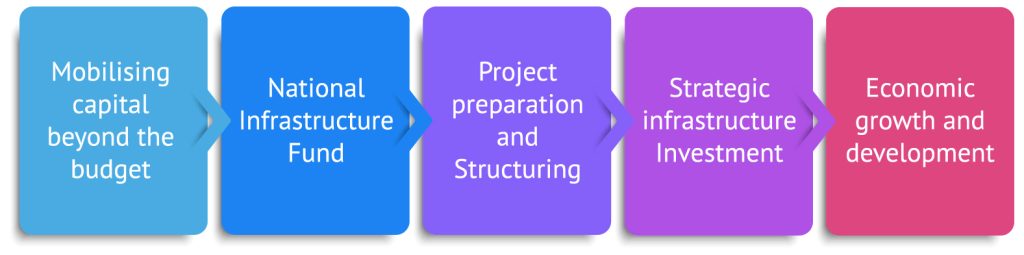
Figure 2: The National Infrastructure Fund Value Chain
Source: Agusto & Co. Research
Governance, Risk and Institutional Resilience
The Fund operates under a two-tier governance structure comprising the Governing Council and the Board of Directors, ensuring a clear separation between strategic oversight, governance and operational responsibilities. This governance architecture is designed to strengthen fiduciary oversight while promoting institutional accountability and transparency in investment decision-making. To preserve institutional integrity, the NIF incorporates governance safeguards that reinforce the independence of the Board and minimise potential conflicts of interest, including restrictions on recent (five years) public service and political affiliations. Following the appointment of the Governing Council in March 2026 and the Board of Directors in July 2026, the ongoing recruitment of executive leadership and senior management represents a step in the right direction towards fully operationalising the Fund in line with its mandate.
Notwithstanding these institutional safeguards, the National Infrastructure Fund remains exposed to implementation risks that could undermine its long-term effectiveness. Among the key risks is the potential influence of political considerations over commercial and developmental priorities, particularly in project selection and capital allocation. Such pressures often intensify during electioneering periods, including the lead-up to the Country’s August 2027 General Elections, potentially compromising the NIF’s strategic investment mandate. Furthermore, as the NIF Act does not specifically provide for the Fund to bypass Kenya’s standard public procurement process framework, complete autonomy from political interference cannot be assumed, particularly given that executive pressure on procurement processes remain a reality in infrastructure developments across many African countries. In addition, the Fund also remains vulnerable to market-related risks, including fluctuations in currency and interest rates, inflationary pressures and evolving investor sentiment, all of which could influence project costs and expected investment returns. Equally significant is bankability risk, stemming from a limited pipeline of investment-ready and commercially viable infrastructure projects, as well as inadequate project preparation, including weak technical and economic feasibility assessments. These shortcomings may result in delayed project execution, constrain capital mobilisation, and impede the timely attainment of financial close.
The NIF nonetheless incorporates a range of institutional and financial mechanisms designed to enhance resilience while mitigating these risks. Beyond providing blended finance and risk-sharing instruments, the Fund is mandated to strengthen Kenya’s local capacity for project origination, preparation, structuring and execution of large and complex infrastructure projects. As part of the investment process, the National Infrastructure Fund also undertakes due diligence to assess project viability, determining whether projects should proceed as proposed, or be restructured to improve bankability. Collectively, these efforts will improve the quality and bankability of future investment projects, deepen the Country’s capital markets, and unlock greater private sector participation in national development. Beyond the statutory governance safeguards, the NIF’s long-term operational independence and effectiveness will ultimately depend on leadership integrity, transparent decision-making, and consistent adherence to the prescribed governance and accountability framework. Over time, the Fund’s positive spillover effects have the potential to catalyse a virtuous cycle of investment, laying a stronger foundation for long-term structural transformation through improved connectivity, productivity and economic competitiveness.
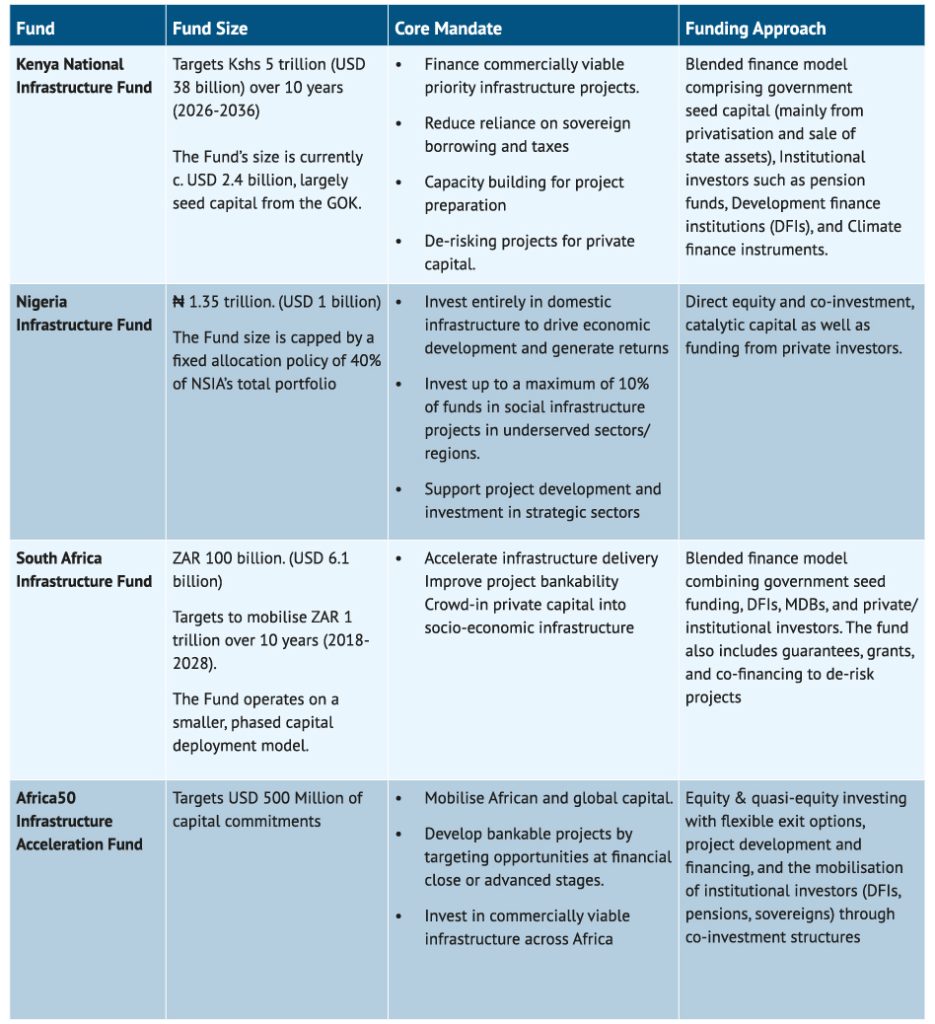
Table 1: Comparative Analysis of Select Infrastructure Funds Across Africa
Kenya’s National infrastructure fund is structured as a single, purpose-built fund with an ambitious scale relative to comparable infrastructure funds in Africa, including Nigeria’ and South Africa. The NIF’s size reflects GOKs strategic intent to establish the Fund as a cornerstone of long-term infrastructure financing, commensurate with the Country’s significant infrastructure investment needs, as well as the sector’s critical role as a key driver of economic growth, contributing c. 11% to Kenya’s Gross Domestic Product (GDP). In contrast, Nigeria’s Infrastructure Fund is subject to a fixed allocation policy of 40% within the Nigeria Sovereign Investment Authority’s (NSIA’s) total portfolio, while South Africa adopts a more decentralised approach, with infrastructure financing channelled through multiple funding vehicles and incrementally disbursed rather than consolidated into a single national fund of comparable scale.
Source: Agusto & Co. Research
Conclusion
The NIF’s value proposition lies in optimising scarce public resources by creating a framework through which commercially viable infrastructure can be financed with commercial capital, thus reducing reliance on taxpayer funding. The Fund’s ability to mobilise substantial private capital and strengthen domestic capacity for infrastructure development can accelerate the delivery of catalytic infrastructure projects. Realising this potential, however, will require strong governance and prudent investment decisions that foster investor confidence and enable effective execution. Ultimately, by delivering transformative infrastructure projects that expand economic opportunities, the National Infrastructure Fund stands poised to catalyse Kenya’s next phase of inclusive and sustainable economic development.
